
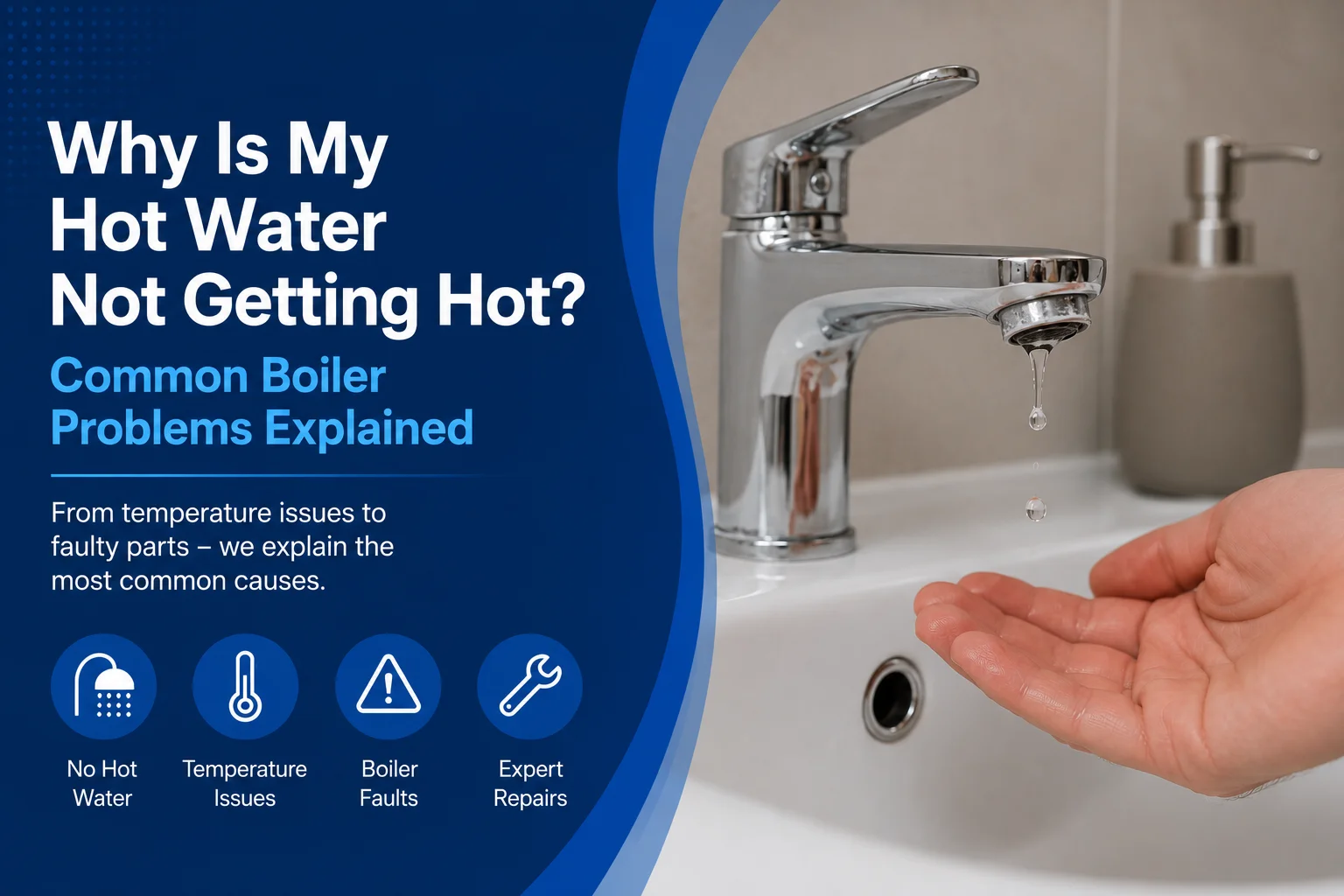
Why Is My Hot Water Not Getting Hot? Common Boiler Problems Explained
Find out why your hot water isn’t getting hot and explore the common boiler faults that could be affecting your home’s comfort.

Why you can trust our content
We understand that the boiler industry can be confusing, with plenty of outdated or misleading information. That’s why we rely only on trusted, proven sources to guide our advice and installations:
If you’ve turned on the tap expecting a hot shower only to find your water is lukewarm or completely cold, you’re not alone. One of the most common calls we receive at Nicholson Heating Services is from homeowners asking why their hot water is not getting hot.
Whether you live in Cramlington, Morpeth, Blyth, Ashington, Newcastle or elsewhere across Northumberland, problems with hot water can be frustrating and inconvenient. While some issues have simple solutions, others require the expertise of a Gas Safe-registered engineer.
In this guide, we’ll explain the most common reasons why your hot water is not getting hot, what you can check yourself, and when it’s time to call a professional.
Why Is My Hot Water Not Getting Hot?
There are several reasons why your hot water may not be reaching the temperature it should. Modern boilers are complex systems with many components working together to provide reliable heating and hot water throughout your home.
When one part develops a fault, it can affect the performance of your entire system.
The good news is that many of the most common causes can be identified quickly by an experienced heating engineer.
Low Boiler Pressure
One of the first things to check when your hot water is not getting hot is your boiler pressure. Most modern boilers operate best when the pressure sits between 1 and 2 bar. If the pressure drops below this range, your boiler may struggle to produce hot water efficiently.
Low pressure can occur for several reasons, including:
- Small leaks within the heating system
- Recently bled radiators
- Faulty pressure relief valves
- Expansion vessel issues
Most boilers have a pressure gauge on the front display. If the pressure is too low, it may need repressurising. If you’re unsure how to do this safely, it’s always best to seek professional advice.
Faulty Diverter Valve
If you have a combi boiler and your heating is working but your hot water is not getting hot, a faulty diverter valve could be responsible.
The diverter valve directs hot water either to your radiators or your taps and shower. When this component sticks or fails, your boiler may prioritise heating instead of domestic hot water.
Common signs of a diverter valve issue include:
- Hot radiators when you only want hot water
- Water temperature is constantly changing
- Poor hot water performance
- Heating is working normally, but the taps are remaining cold
This is a repair that should be carried out by a qualified Gas Safe engineer.
Thermostat and Temperature Settings
Sometimes the reason your hot water is not getting hot is surprisingly simple.
Accidental changes to your boiler settings can reduce water temperatures significantly. This often happens after power cuts, maintenance work or adjustments made by other household members.
Check:
- Boiler temperature settings
- Programmer settings
- Smart thermostat settings
- Hot water schedules
Many homeowners are surprised to discover that the issue is simply a temperature setting that has been lowered unintentionally.
Limescale Build-Up in the Boiler
Although Northumberland generally has softer water than some parts of the country, limescale can still develop within certain boiler components over time.
Limescale restricts heat transfer and can reduce your boiler’s ability to heat water effectively.
Signs of limescale problems may include:
- Reduced hot water temperature
- Increased energy bills
- Strange noises from the boiler
- Longer waiting times for hot water
Regular boiler servicing can help identify early signs of limescale build-up before it causes more significant problems.
Faulty Heat Exchanger
The heat exchanger is one of the most important components within your boiler.
Its job is to transfer heat from the burner to the water circulating through your system. If the heat exchanger becomes blocked, damaged or worn, your hot water may not get hot enough.
A faulty heat exchanger can often lead to:
- Poor hot water performance
- Inconsistent temperatures
- Boiler lockouts
- Reduced efficiency
Diagnosis and repair should always be carried out by a Gas Safe registered engineer.
Frozen or Blocked Condensate Pipe
Although this problem is more common during winter, blockages within the condensate pipe can affect boiler performance at any time of year.
If the pipe becomes blocked, your boiler may shut down or operate inefficiently.
While frozen condensate pipes are less likely during summer, debris or other blockages can still occur and prevent your boiler from functioning correctly.
Boiler Component Failure
Modern boilers rely on a variety of sensors, pumps, valves and electronic controls. If any of these components fail, it can affect hot water production.
Some common faulty components include:
- Temperature sensors
- Printed circuit boards
- Flow switches
- Pumps
- Pressure sensors
Identifying the exact cause often requires specialist diagnostic equipment and experience.
Could Your Boiler Be Too Old?
If your boiler is over 10 to 15 years old and your hot water is not getting hot, age could be a contributing factor.
Older boilers naturally become less efficient over time. Components wear out, replacement parts become harder to source, and performance can decline.
If you’re regularly experiencing hot water problems, it may be worth discussing whether a boiler replacement could offer a more reliable and energy-efficient solution.
How to Prevent Hot Water Problems
Prevention is often far cheaper than repairs. A few simple steps can help keep your boiler running efficiently.
Book an Annual Boiler Service
Regular servicing allows engineers to identify small issues before they become expensive repairs.
Monitor Boiler Pressure
Checking your pressure gauge occasionally can help you spot problems early.
Address Small Issues Quickly
Ignoring unusual noises, leaks, or inconsistent temperatures can often lead to larger faults later.
Install a Magnetic Filter
Magnetic filters help capture sludge and debris before it enters your boiler.
When Should You Call a Heating Engineer?
If you’ve checked your settings and pressure, but your hot water is not getting hot, it’s time to contact a professional.
A qualified Gas Safe engineer can safely diagnose the problem and recommend the most effective solution.
Attempting repairs yourself can be dangerous and may invalidate warranties or insurance policies.
Boiler Repairs in Cramlington and Across Northumberland
At Nicholson Heating Services, we provide professional boiler repairs, boiler servicing and heating solutions throughout Cramlington, Morpeth, Blyth, Ashington, Newcastle and the surrounding Northumberland area.
Our experienced team works with all major boiler manufacturers and can quickly identify why your hot water is not getting hot.
Whether it’s a simple pressure issue, a faulty diverter valve or a more complex repair, we’re here to help.
Frequently Asked Questions
Why is my hot water not getting hot, but my heating works?
This is often caused by a faulty diverter valve, particularly in combi boilers. It may also indicate a sensor or control issue.
Can low boiler pressure affect hot water?
Yes. Low boiler pressure can reduce performance and prevent your system from producing hot water efficiently.
Should I replace my boiler if my hot water is not getting hot?
Not necessarily. Many hot water problems can be repaired. However, if your boiler is older and experiencing frequent issues, replacement may be worth considering.
How often should I service my boiler?
Most manufacturers recommend an annual boiler service to maintain efficiency, safety and warranty cover.
Need Help With Your Hot Water?
If your hot water is not getting hot and you’re looking for a trusted heating engineer in Cramlington or anywhere across Northumberland, contact Nicholson Heating Services today.
Our Gas Safe registered engineers can diagnose the problem, carry out repairs and get your hot water flowing properly again.
Related articles
What type of boiler do you currently have?

Combi Boiler

Regular Boiler

System Boiler

Back Boiler
If you’ve turned on the tap expecting a hot shower only to find your water is lukewarm or completely cold, you’re not alone. One of the most common calls we receive at Nicholson Heating Services is from homeowners asking why their hot water is not getting hot.
Whether you live in Cramlington, Morpeth, Blyth, Ashington, Newcastle or elsewhere across Northumberland, problems with hot water can be frustrating and inconvenient. While some issues have simple solutions, others require the expertise of a Gas Safe-registered engineer.
In this guide, we’ll explain the most common reasons why your hot water is not getting hot, what you can check yourself, and when it’s time to call a professional.
Why Is My Hot Water Not Getting Hot?
There are several reasons why your hot water may not be reaching the temperature it should. Modern boilers are complex systems with many components working together to provide reliable heating and hot water throughout your home.
When one part develops a fault, it can affect the performance of your entire system.
The good news is that many of the most common causes can be identified quickly by an experienced heating engineer.
Low Boiler Pressure
One of the first things to check when your hot water is not getting hot is your boiler pressure. Most modern boilers operate best when the pressure sits between 1 and 2 bar. If the pressure drops below this range, your boiler may struggle to produce hot water efficiently.
Low pressure can occur for several reasons, including:
- Small leaks within the heating system
- Recently bled radiators
- Faulty pressure relief valves
- Expansion vessel issues
Most boilers have a pressure gauge on the front display. If the pressure is too low, it may need repressurising. If you’re unsure how to do this safely, it’s always best to seek professional advice.
Faulty Diverter Valve
If you have a combi boiler and your heating is working but your hot water is not getting hot, a faulty diverter valve could be responsible.
The diverter valve directs hot water either to your radiators or your taps and shower. When this component sticks or fails, your boiler may prioritise heating instead of domestic hot water.
Common signs of a diverter valve issue include:
- Hot radiators when you only want hot water
- Water temperature is constantly changing
- Poor hot water performance
- Heating is working normally, but the taps are remaining cold
This is a repair that should be carried out by a qualified Gas Safe engineer.
Thermostat and Temperature Settings
Sometimes the reason your hot water is not getting hot is surprisingly simple.
Accidental changes to your boiler settings can reduce water temperatures significantly. This often happens after power cuts, maintenance work or adjustments made by other household members.
Check:
- Boiler temperature settings
- Programmer settings
- Smart thermostat settings
- Hot water schedules
Many homeowners are surprised to discover that the issue is simply a temperature setting that has been lowered unintentionally.
Limescale Build-Up in the Boiler
Although Northumberland generally has softer water than some parts of the country, limescale can still develop within certain boiler components over time.
Limescale restricts heat transfer and can reduce your boiler’s ability to heat water effectively.
Signs of limescale problems may include:
- Reduced hot water temperature
- Increased energy bills
- Strange noises from the boiler
- Longer waiting times for hot water
Regular boiler servicing can help identify early signs of limescale build-up before it causes more significant problems.
Faulty Heat Exchanger
The heat exchanger is one of the most important components within your boiler.
Its job is to transfer heat from the burner to the water circulating through your system. If the heat exchanger becomes blocked, damaged or worn, your hot water may not get hot enough.
A faulty heat exchanger can often lead to:
- Poor hot water performance
- Inconsistent temperatures
- Boiler lockouts
- Reduced efficiency
Diagnosis and repair should always be carried out by a Gas Safe registered engineer.
Frozen or Blocked Condensate Pipe
Although this problem is more common during winter, blockages within the condensate pipe can affect boiler performance at any time of year.
If the pipe becomes blocked, your boiler may shut down or operate inefficiently.
While frozen condensate pipes are less likely during summer, debris or other blockages can still occur and prevent your boiler from functioning correctly.
Boiler Component Failure
Modern boilers rely on a variety of sensors, pumps, valves and electronic controls. If any of these components fail, it can affect hot water production.
Some common faulty components include:
- Temperature sensors
- Printed circuit boards
- Flow switches
- Pumps
- Pressure sensors
Identifying the exact cause often requires specialist diagnostic equipment and experience.
Could Your Boiler Be Too Old?
If your boiler is over 10 to 15 years old and your hot water is not getting hot, age could be a contributing factor.
Older boilers naturally become less efficient over time. Components wear out, replacement parts become harder to source, and performance can decline.
If you’re regularly experiencing hot water problems, it may be worth discussing whether a boiler replacement could offer a more reliable and energy-efficient solution.
How to Prevent Hot Water Problems
Prevention is often far cheaper than repairs. A few simple steps can help keep your boiler running efficiently.
Book an Annual Boiler Service
Regular servicing allows engineers to identify small issues before they become expensive repairs.
Monitor Boiler Pressure
Checking your pressure gauge occasionally can help you spot problems early.
Address Small Issues Quickly
Ignoring unusual noises, leaks, or inconsistent temperatures can often lead to larger faults later.
Install a Magnetic Filter
Magnetic filters help capture sludge and debris before it enters your boiler.
When Should You Call a Heating Engineer?
If you’ve checked your settings and pressure, but your hot water is not getting hot, it’s time to contact a professional.
A qualified Gas Safe engineer can safely diagnose the problem and recommend the most effective solution.
Attempting repairs yourself can be dangerous and may invalidate warranties or insurance policies.
Boiler Repairs in Cramlington and Across Northumberland
At Nicholson Heating Services, we provide professional boiler repairs, boiler servicing and heating solutions throughout Cramlington, Morpeth, Blyth, Ashington, Newcastle and the surrounding Northumberland area.
Our experienced team works with all major boiler manufacturers and can quickly identify why your hot water is not getting hot.
Whether it’s a simple pressure issue, a faulty diverter valve or a more complex repair, we’re here to help.
Frequently Asked Questions
Why is my hot water not getting hot, but my heating works?
This is often caused by a faulty diverter valve, particularly in combi boilers. It may also indicate a sensor or control issue.
Can low boiler pressure affect hot water?
Yes. Low boiler pressure can reduce performance and prevent your system from producing hot water efficiently.
Should I replace my boiler if my hot water is not getting hot?
Not necessarily. Many hot water problems can be repaired. However, if your boiler is older and experiencing frequent issues, replacement may be worth considering.
How often should I service my boiler?
Most manufacturers recommend an annual boiler service to maintain efficiency, safety and warranty cover.
Need Help With Your Hot Water?
If your hot water is not getting hot and you’re looking for a trusted heating engineer in Cramlington or anywhere across Northumberland, contact Nicholson Heating Services today.
Our Gas Safe registered engineers can diagnose the problem, carry out repairs and get your hot water flowing properly again.
Related articles
What type of boiler do you currently have?
Combi Boiler
Regular Boiler
System Boiler
Back Boiler