
Boiler Not Working? 5 Quick Checks Before Calling an Engineer
Boiler not working? Try these 5 quick and safe checks before calling an engineer to identify common issues and restore heating quickly.

Why you can trust our content
We understand that the boiler industry can be confusing, with plenty of outdated or misleading information. That’s why we rely only on trusted, proven sources to guide our advice and installations:

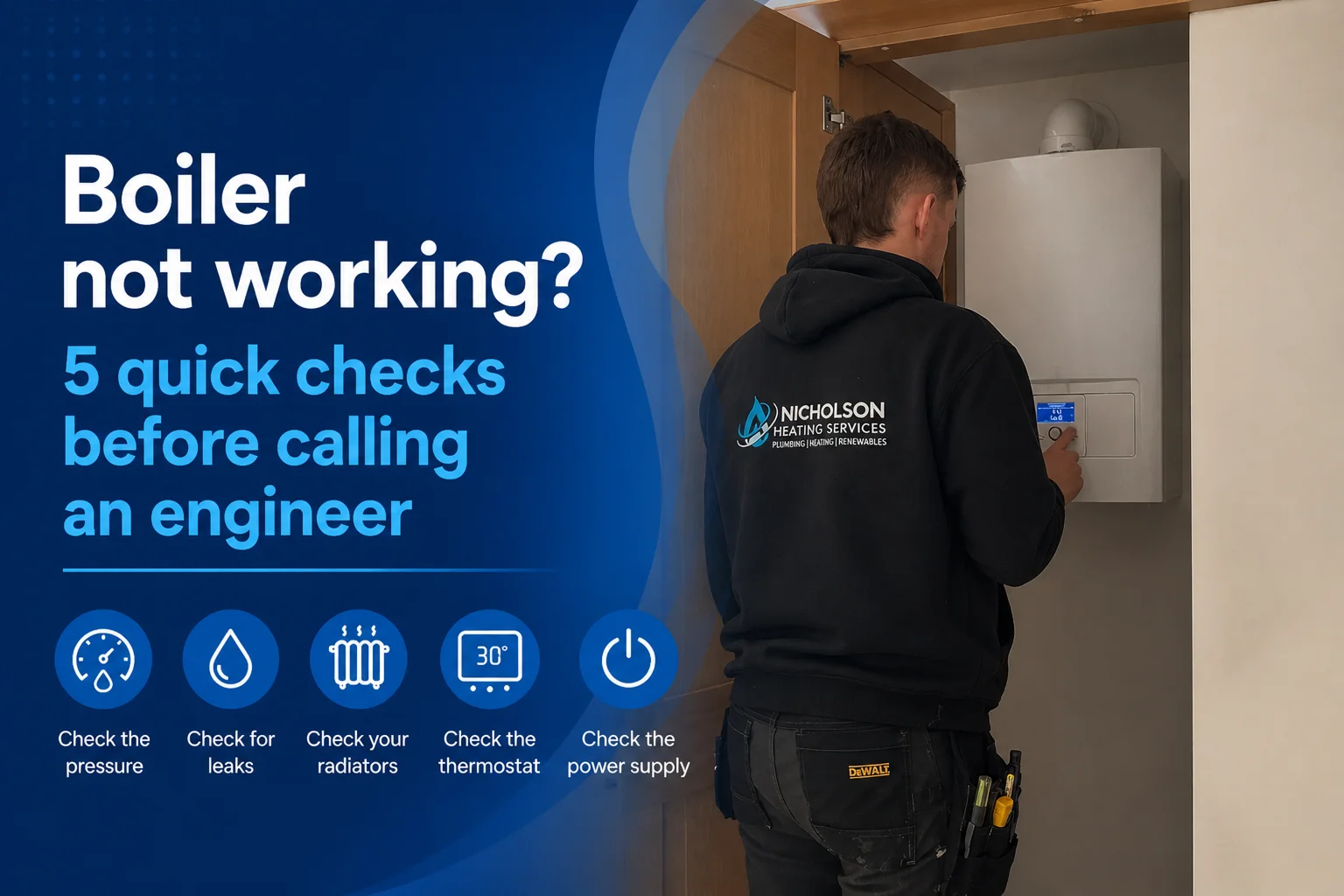
If your boiler is not working, it can quickly turn into a stressful situation. No heating, no hot water, and the worry of an expensive repair can make it feel like something has gone seriously wrong. However, before you assume the worst, it is worth knowing that many common boiler issues are caused by simple problems that can be checked safely at home.
In fact, a typical boiler not working issue is often linked to pressure, settings, or minor system faults rather than a full breakdown. Taking a few minutes to run through some basic checks could save you both time and money.
1. Check the Boiler Pressure First
One of the most common reasons behind a boiler not working properly is low pressure. Your boiler relies on consistent pressure to circulate hot water throughout your home, and even a slight drop can affect performance.
Most boilers have a pressure gauge on the front. When the system is cold, it should usually sit between 1 and 2 bar. If it has dropped below this, your boiler may struggle to function or stop working altogether.
Topping up the pressure using the filling loop is often a quick fix, but it is important to follow the manufacturer’s instructions carefully. If you find yourself needing to do this regularly, it could point to a deeper issue, such as a leak or worn component, which would need professional attention.
2. Look for Any Signs of Leaks
Leaks are another common cause of a boiler not working issue, and they are something you should never ignore. Even a small leak can reduce pressure and lead to long-term damage if left unresolved.
Take a moment to check around the boiler itself, as well as any visible pipework nearby. Damp patches, small drips, or signs of corrosion can all indicate that water is escaping from the system.
While it might be tempting to keep the boiler running, it is always safer to switch it off if you suspect a leak and contact a qualified engineer. Catching this early can prevent more serious and costly repairs later on.
3. Make Sure Your Radiators Are Working Properly
Sometimes what appears to be a boiler not working problem is actually an issue with your heating system rather than the boiler itself. Radiators that are not heating evenly can give the impression that your boiler has failed.
If you notice cold spots, especially at the top of your radiators, it usually means air is trapped inside the system. Bleeding your radiators can release this air and restore proper heat circulation.
It is also worth checking that radiator valves are fully open and not stuck. These small adjustments can make a noticeable difference and may solve the issue without the need for a repair.
4. Double Check Your Thermostat Settings
It might sound obvious, but thermostat settings are a surprisingly common reason why people think they have a boiler not working issue. If the thermostat is not set correctly, your boiler simply will not turn on when you expect it to.
Make sure the temperature is set high enough to trigger the heating, and check that your timer or schedule is active. If you are using a wireless thermostat, low or dead batteries can also stop it from communicating with the boiler.
Taking a minute to review these settings can often solve the problem instantly and save you an unnecessary callout.
5. Check the Power Supply
If your boiler is completely unresponsive, the issue may not be mechanical at all. A boiler not working can sometimes come down to a simple power supply problem.
Start by checking that the boiler is switched on and that there has not been a power cut. It is also worth looking at your fuse box to see if a circuit breaker has tripped.
A blank display or no lights on the boiler is often a clear sign that power is the issue. In many cases, restoring the power supply is all that is needed to get things running again.
When It Is Time to Call a Professional
While these checks cover the most common causes, they will not fix every situation. If your boiler is not working after going through each of these steps, it is important to seek professional help.
Recurring issues, unusual noises, persistent error codes, or visible damage are all signs that something more serious may be wrong. Attempting to fix these problems yourself can be unsafe and may cause further damage to the system.
How Nicholson Heating Services Can Help
If you are still dealing with a boiler that is not working, Nicholson Heating Services can provide the support you need. Their experienced engineers are trained to quickly diagnose faults and carry out reliable repairs, helping you get your heating and hot water back as soon as possible.
Whether the issue is minor or more complex, they offer honest advice and practical solutions tailored to your home. From quick fixes to full system servicing, you can rely on a professional approach that puts your comfort first.
Simple Checks Before Calling a Boiler Engineer
Experiencing a boiler issue does not always mean the worst-case scenario. In many situations, the cause is something simple that can be resolved with a quick check.
By taking the time to go through these steps, you may be able to identify and fix a boiler not working issue without the need for an engineer. However, if the problem continues, it is always best to get expert help.
Nicholson Heating Services is on hand to make sure your home stays warm, safe, and running smoothly all year round.
Related articles
What type of boiler do you currently have?

Combi Boiler

Regular Boiler

System Boiler

Back Boiler
If your boiler is not working, it can quickly turn into a stressful situation. No heating, no hot water, and the worry of an expensive repair can make it feel like something has gone seriously wrong. However, before you assume the worst, it is worth knowing that many common boiler issues are caused by simple problems that can be checked safely at home.
In fact, a typical boiler not working issue is often linked to pressure, settings, or minor system faults rather than a full breakdown. Taking a few minutes to run through some basic checks could save you both time and money.
1. Check the Boiler Pressure First
One of the most common reasons behind a boiler not working properly is low pressure. Your boiler relies on consistent pressure to circulate hot water throughout your home, and even a slight drop can affect performance.
Most boilers have a pressure gauge on the front. When the system is cold, it should usually sit between 1 and 2 bar. If it has dropped below this, your boiler may struggle to function or stop working altogether.
Topping up the pressure using the filling loop is often a quick fix, but it is important to follow the manufacturer’s instructions carefully. If you find yourself needing to do this regularly, it could point to a deeper issue, such as a leak or worn component, which would need professional attention.
2. Look for Any Signs of Leaks
Leaks are another common cause of a boiler not working issue, and they are something you should never ignore. Even a small leak can reduce pressure and lead to long-term damage if left unresolved.
Take a moment to check around the boiler itself, as well as any visible pipework nearby. Damp patches, small drips, or signs of corrosion can all indicate that water is escaping from the system.
While it might be tempting to keep the boiler running, it is always safer to switch it off if you suspect a leak and contact a qualified engineer. Catching this early can prevent more serious and costly repairs later on.
3. Make Sure Your Radiators Are Working Properly
Sometimes what appears to be a boiler not working problem is actually an issue with your heating system rather than the boiler itself. Radiators that are not heating evenly can give the impression that your boiler has failed.
If you notice cold spots, especially at the top of your radiators, it usually means air is trapped inside the system. Bleeding your radiators can release this air and restore proper heat circulation.
It is also worth checking that radiator valves are fully open and not stuck. These small adjustments can make a noticeable difference and may solve the issue without the need for a repair.
4. Double Check Your Thermostat Settings
It might sound obvious, but thermostat settings are a surprisingly common reason why people think they have a boiler not working issue. If the thermostat is not set correctly, your boiler simply will not turn on when you expect it to.
Make sure the temperature is set high enough to trigger the heating, and check that your timer or schedule is active. If you are using a wireless thermostat, low or dead batteries can also stop it from communicating with the boiler.
Taking a minute to review these settings can often solve the problem instantly and save you an unnecessary callout.
5. Check the Power Supply
If your boiler is completely unresponsive, the issue may not be mechanical at all. A boiler not working can sometimes come down to a simple power supply problem.
Start by checking that the boiler is switched on and that there has not been a power cut. It is also worth looking at your fuse box to see if a circuit breaker has tripped.
A blank display or no lights on the boiler is often a clear sign that power is the issue. In many cases, restoring the power supply is all that is needed to get things running again.
When It Is Time to Call a Professional
While these checks cover the most common causes, they will not fix every situation. If your boiler is not working after going through each of these steps, it is important to seek professional help.
Recurring issues, unusual noises, persistent error codes, or visible damage are all signs that something more serious may be wrong. Attempting to fix these problems yourself can be unsafe and may cause further damage to the system.
How Nicholson Heating Services Can Help
If you are still dealing with a boiler that is not working, Nicholson Heating Services can provide the support you need. Their experienced engineers are trained to quickly diagnose faults and carry out reliable repairs, helping you get your heating and hot water back as soon as possible.
Whether the issue is minor or more complex, they offer honest advice and practical solutions tailored to your home. From quick fixes to full system servicing, you can rely on a professional approach that puts your comfort first.
Simple Checks Before Calling a Boiler Engineer
Experiencing a boiler issue does not always mean the worst-case scenario. In many situations, the cause is something simple that can be resolved with a quick check.
By taking the time to go through these steps, you may be able to identify and fix a boiler not working issue without the need for an engineer. However, if the problem continues, it is always best to get expert help.
Nicholson Heating Services is on hand to make sure your home stays warm, safe, and running smoothly all year round.
Related articles

What type of boiler do you currently have?
Combi Boiler
Regular Boiler
System Boiler
Back Boiler